
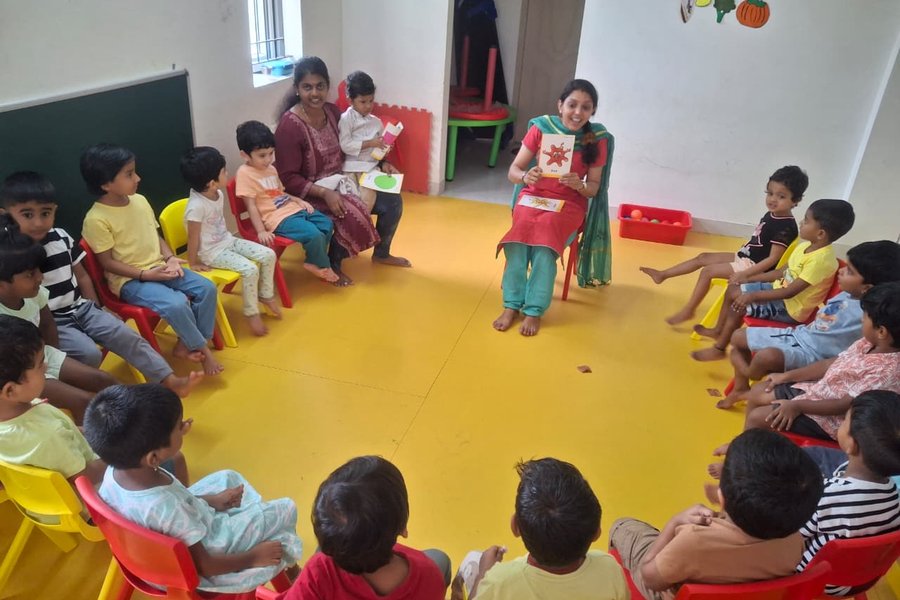
Three is a magic age. Your child has shed most of the toddler wobbliness and stepped into something that looks a lot like a real person with opinions, a sense of humour, and an imagination that can turn a cardboard box into a spaceship. But three is also an age that confuses many parents, because the developmental leaps are enormous, the range of “normal” is wide, and it can be hard to know what to expect.
Here is a practical guide to the milestones most children reach between their third and fourth birthdays, along with some signs that it may be worth a conversation with your paediatrician.
Language and Communication
By three, most children can speak in sentences of four to six words and be understood by people outside the family about 75% of the time. You should be hearing regular use of pronouns (I, me, you, he, she), and your child should be able to tell you their first and last name.
Look out for: questions — three-year-olds ask a lot of them. “Why?” and “What’s that?” are signs of healthy cognitive development even when they are exhausting. You should also see emerging storytelling: your child retelling something that happened to them, even if the sequence is a little jumbled.
Worth discussing with your doctor: if your child’s speech is still difficult for close family to understand, if they are not using sentences, or if they have lost language skills they previously had.
Social and Emotional Development
Three-year-olds are just beginning to understand that other people have their own feelings, perspectives, and desires — the dawn of empathy. You might notice your child offering a toy to a friend who is crying, or checking your face to see how you are feeling.
Pretend play becomes richly social at this age. Children begin to assign roles in play (“you be the mummy, I’ll be the baby”) and can negotiate and sustain imaginative scenarios for extended periods. This is not just fun — it is high-level cognitive and emotional work.
Tantrums may still happen but should be decreasing in frequency. Your child is developing impulse control, though it is a long road — the prefrontal cortex (where self-regulation lives) does not fully mature until the mid-twenties.
Fine Motor Skills
By three, most children can hold a crayon or pencil with three fingers rather than a fist grip. They can draw a rough circle, turn pages in a book one at a time, and manage simple fastenings like large buttons or Velcro.
At Waddle Kids, we pay close attention to pencil grip and hand strength because these predict writing readiness. Activities like threading beads, tearing paper, using child-safe scissors, and playing with playdough all build the hand muscles and coordination that writing requires.
Gross Motor Skills
Three-year-olds should be able to walk upstairs alternating feet (one foot per step), run with reasonable control, kick a ball forward, and jump with both feet together. Many can also ride a tricycle and balance briefly on one foot.
Outdoor, unstructured physical play is essential at this age — not only for motor development, but for sensory processing, risk assessment, and confidence.
Cognitive Development
At three, children begin to understand the concept of “two” or “three” objects (though counting beyond five is not expected until closer to four). They can match colours and shapes, sort objects by one attribute (all the red ones here, all the blue ones there), and follow two-step instructions (“put your shoes on and then get your bag”).
Symbolic play — using one object to represent another — is in full swing. A wooden spoon becomes a microphone; a cardboard tube becomes a telescope. This symbolic thinking is the precursor to literacy (where letters represent sounds) and numeracy (where symbols represent quantities).
A Word on the Range of Normal
Development is not a race, and milestones are not a checklist where every box needs to be ticked by a specific date. Children develop unevenly — a child who is an early talker may be a later walker, and vice versa. The milestones above represent the typical range, not the minimum or maximum. If you have any concerns about your child’s development, your paediatrician is always the right first call.
What we can tell you from our classrooms: three-year-olds who feel safe, seen, and free to play develop faster and more confidently than those who are hurried. Trust the process, and trust your child.